


12 Advantages of Living in a City (and why Barcelona makes the case)

12 Advantages of Living in a City (and why Barcelona makes the case)

The city vs. the countryside: a debate that never quite ends
If you are weighing a move and trying to figure out whether city life is actually worth it, you are not alone. The debate between urban and rural living is one of the most genuinely personal decisions people make, and there is rarely a single right answer. Some people thrive with space, quiet, and a slower pace. Others discover, often only after trying both, that the density and convenience of city living suits them far better than they expected.
What we can do is lay out the concrete advantages of living in a city, the ones that show up in everyday life rather than just in travel brochures. Whether you are considering a move to a European city like Barcelona, or simply trying to decide between urban and suburban living closer to home, these points are worth thinking through honestly. If Barcelona is on your radar specifically, our guide on living in Barcelona as an expat covers the practical side in detail.
1. Everything you need is within walking distance
This is the advantage that city dwellers mention most often when asked what they would miss if they moved away. In a well-functioning urban neighbourhood, a pharmacy, a supermarket, a doctor’s office, and somewhere decent to eat are all within a ten or fifteen minute walk. That sounds unremarkable until you have spent a few years getting in the car every time you need something.
The cumulative effect on daily life is significant. Forgetting something at the supermarket is a five-minute errand. Running out of a prescription is manageable, not a logistical problem. The mental load of planning around distance simply disappears. For families moving from car-dependent suburbs in the US or the UK, this shift is one of the most commonly cited quality-of-life improvements, and it tends to compound the longer you experience it.
2. Public transport that can genuinely replace your car
In most rural and suburban areas, a car is not optional. It is a basic infrastructure requirement, and everything from the school run to the weekly shop is built around it. Cities change that equation entirely. A good urban public transport network means you can get from one side of the city to the other for a couple of dollars or euros, without parking, without fuel costs, and often faster than driving.
The financial difference is worth naming directly. According to AAA, the average annual cost of owning and running a new vehicle in the United States exceeds $10,000. Eliminating that expense, or reducing it to occasional car rentals, goes a long way toward offsetting higher urban rents. Beyond the money, there is the independence it creates: teenagers, elderly residents, and anyone without a driving licence can move around freely. Cities like Barcelona make this especially tangible, with a metro, tram, and bus network that covers almost every corner of the city at low cost.
3. Better access to schools, universities, and professional development
For families with children, access to quality education is one of the most practical reasons to choose city life, even if it rarely tops the list when people talk about urban advantages. Cities concentrate schools, both public and private, at a density that rural areas simply cannot match. International schools, bilingual programmes, and specialist institutions are far more available in urban centres than anywhere else.
Children growing up in cities also tend to gain independence earlier, because they can navigate their own way to school, to friends’ houses, and to after-school activities without needing an adult to drive them. That is not a small thing developmentally. For adults, cities are where professional training, universities, language schools, and networking events cluster. If you are moving to Barcelona with children, our guide on moving to Barcelona with family or kids goes into the education options in much more depth. According to OECD data, educational attainment is consistently higher in urban areas than in rural or semi-dense regions across all income groups.
4. Healthcare that is actually close to you
The gap in healthcare access between urban and rural living is one of the most well-documented quality-of-life differences between the two. In the United States, rural residents live an average of more than ten miles from the nearest hospital. Urban residents, by contrast, are typically within a few miles, and in a dense European city they may be within a fifteen-minute walk of a primary care centre.
Distance matters, but so does depth of provision. Cities concentrate specialists, diagnostic equipment, and hospital infrastructure in a way that rural healthcare networks cannot replicate. If you need a cardiologist, a neurologist, or a paediatric specialist, you are far more likely to find one quickly in a city. Proximity to emergency services also changes the nature of risk in a meaningful way: in an urban area, an ambulance response time is measured in minutes rather than the fifteen to thirty minutes typical in rural settings.
5. More job opportunities, and generally higher salaries
This is one of the oldest arguments for city living, and it holds up. Cities attract companies, and companies attract talent, which drives up wages for everyone in the market. Research consistently shows that workers in large metropolitan areas earn higher salaries than those in smaller towns or rural areas, even after adjusting for the higher cost of living.
The range of available roles also matters. In a rural area, if the one employer in your field does not have an opening, your options are limited. In a city, there are usually multiple organisations competing for the same skills, which gives workers more negotiating power and more freedom to move if something does not work out. For professionals considering a move to a European city, Barcelona in particular has become a significant hub for tech, design, finance, and remote-friendly companies. And for those who can work remotely from anywhere, the city offers major-city infrastructure at a cost of living that is typically 30 to 50 percent lower than London or New York. You can see a full breakdown in our comparison of the costs of living in Barcelona versus the USA.
6. A richer cultural and social life
The cultural gap between urban and rural living is one of those things that is easy to underestimate until you experience it in the other direction. Cities have museums, galleries, live music venues, theatres, independent cinemas, food markets, and a calendar of events that gives you options every single weekend, and most weekday evenings too. None of this requires spending a lot of money. Many museums have free entry days. Parks are public. Walking through a historic city centre is free.
Social life also scales differently in cities. Meeting new people, joining hobby groups, finding your community after a move, all of this is easier when there are simply more people and more organised activities around you. The diversity that large cities attract adds a further dimension: exposure to different cultures, cuisines, languages, and perspectives is a genuine and daily part of urban life in a way that it simply is not in more homogeneous environments. Barcelona is a good example of this, with around 25 percent of its population born outside Spain and a particularly active international expat scene.
7. Safety infrastructure that responds faster when you need it
The relationship between cities and safety is more nuanced than the headlines suggest. Urban areas do tend to have more reported crime in absolute terms, largely because they have more people. But the infrastructure that responds to emergencies is also dramatically better. More police per square mile, faster ambulance response times, more hospitals, and more people around in public spaces all contribute to a different risk profile than rural living.
For families with elderly members, for parents of young children, and for anyone with a health condition that could require rapid intervention, the response time difference is not abstract. It is the difference between an ambulance arriving in seven minutes and arriving in twenty-five. Cities also tend to have better-lit streets, more pedestrian traffic at most hours, and a greater density of services that contribute to day-to-day safety. When choosing between city neighbourhoods, the differences within a city can be as significant as the difference between urban and rural: our overview of the best neighbourhoods to live in Barcelona gives a practical sense of how much each area’s character varies.
8. Shopping, dining, and deliveries without the logistics
Access to a wide variety of food, shops, and restaurants is not a trivial quality-of-life factor. In a city, you have options: different supermarkets, farmers’ markets, independent food shops, dozens of cuisines within a short walk. You are not limited to whatever happens to be in your town. That variety is part of what makes daily life in a city feel richer and more interesting, particularly if you enjoy cooking or eating out.
E-commerce and delivery logistics are also different in cities. Same-day delivery, dense courier coverage, and reliable service from every major platform are simply part of urban life. For anyone accustomed to the delivery expectations of US or UK cities, moving to a rural area in Europe often involves a genuine and frustrating adjustment in what arrives, when, and in what condition. That adjustment does not exist in a major urban centre.
9. Lower property maintenance and more flexibility in what you can afford
People often assume city living is more expensive in every dimension. The rental and purchase costs are typically higher, that is true. But the total cost of running your home can be lower than in the suburbs or countryside, particularly if you are comparing an apartment in a city to a house with a garden elsewhere. No roof to maintain on your own, no garden, no driveway, no external structures. For families relocating from large American or British houses, the reduction in weekend maintenance demands is consistently one of the most welcome surprises.
Urban property markets also offer more flexibility. At any given time, a city like Barcelona has a much wider range of properties available across different sizes, neighbourhoods, and price points than a rural or small-town market. That flexibility is particularly valuable when you are new to a place and still figuring out which area suits you. If you are at the stage of actively looking, our guide on how to find a flat in Barcelona covers the process honestly. You can also browse the current real estate Barcelona listings to get a sense of what the market looks like, from compact apartments in the Eixample to larger family homes in the upper districts, including some of the most sought-after streets in the city.
10. Sustainability and the direction cities are heading
This is an advantage that most listicles about city living skip entirely, but it is worth including for anyone thinking about a longer-term move. The world’s major cities are investing in sustainable infrastructure at a scale and speed that suburban and rural areas are not. Low-emission zones, expanded cycling infrastructure, electric public transport, green corridors, and energy-efficient housing development are all happening primarily in cities, because that is where the population density makes them viable and where political will is strongest.
For families thinking about where to raise children over the next ten or twenty years, the direction of travel matters as much as the current state. A city that is actively reducing car traffic, improving air quality, and expanding green space is a different long-term proposition to a suburb that is not designed to change. Barcelona is often cited as a European leader in this area, with its Superblocks programme and the 22@ innovation district both representing significant urban transformation projects that have already changed how parts of the city function.
11. Airport access and staying connected internationally
For anyone relocating from another country, or maintaining professional or personal ties across borders, proximity to a major international airport is a significant practical factor. It is easy to underestimate until you are living somewhere without it. Major cities have major airports, and that means more direct routes, more competitive fares, and a shorter journey from your front door to the departure gate.
For families visiting relatives in the US or the UK, for professionals who travel for work, and for anyone maintaining a transatlantic lifestyle, this matters more than it might initially seem. The difference between a forty-minute taxi ride to an airport and a ninety-minute drive to a regional one changes what is worth doing for a long weekend versus what requires a planned trip. Barcelona-El Prat is a good example: one of Europe’s busiest airports, with direct connections to most major US cities and daily flights to London, within easy reach of central Barcelona by public transport.
12. The trade-offs: what city living costs you
An honest article about the advantages of city living has to name what you give up. Space is the most obvious one: city apartments are smaller than suburban or rural houses at equivalent or lower price points. Noise is real, particularly if you are near a main road or in a dense neighbourhood. Green space requires more effort to reach. And the cost of living in central urban areas is genuinely higher than in rural or suburban equivalents in most markets.
None of these are trivial, and the right answer depends heavily on what stage of life you are in and what you actually value day to day. A couple without children working remotely may experience city life very differently from a family with three kids who needs a garden.
What the evidence consistently shows, however, is that for most people who make the move, the advantages outweigh the costs. Access to services, professional opportunity, cultural richness, social connection, and the practical ease of urban daily life tend to tip the balance for the majority of long-term city residents. If you are weighing a move to Barcelona specifically, whether you are thinking about retiring in Barcelona or relocating for work or family, we have been helping international buyers navigate the market since 2005. Browse our current properties for sale Barcelona, or get in touch and we can help you work out which part of the city makes most sense for your situation.

You may also be interested in...
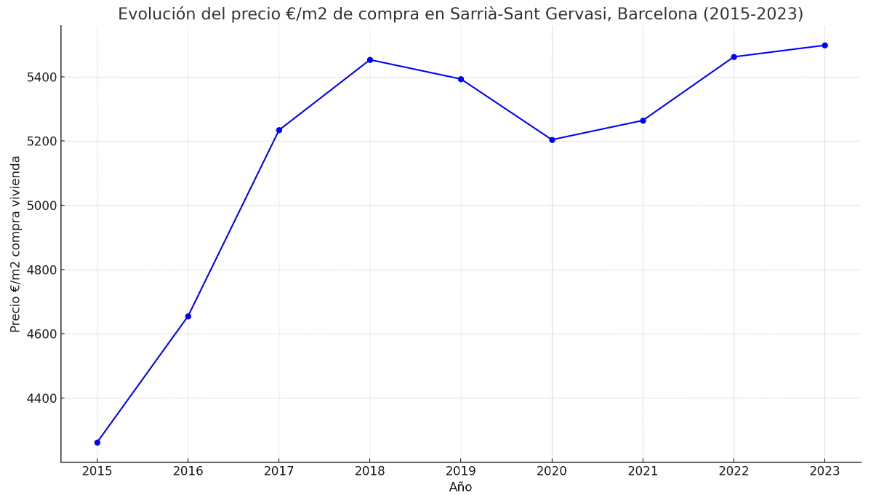
Price per square meter in Sarrià-Sant Gervasi
When exploring the luxury real estate market in Barcelona, the price per square meter in Sarrià-Sant Gervasi stands out as a key indicator of exclusivity and prestige. This emblematic district, known for its quiet streets, green parks, and exceptional quality of life, has established itself as one o
Read more
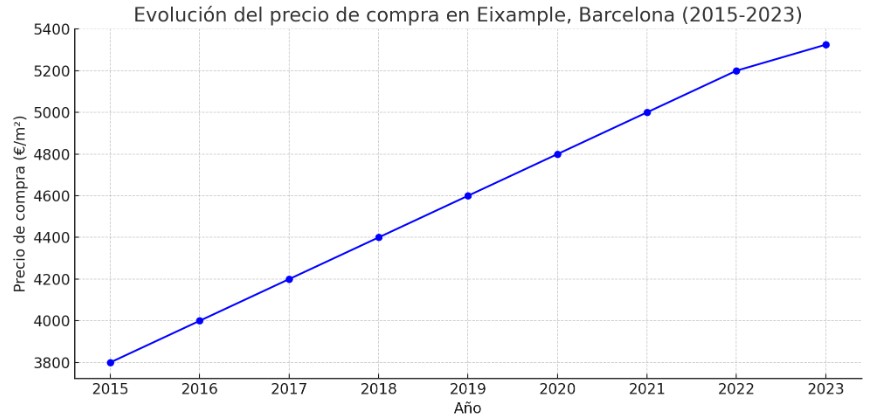
Price per square meter in the Eixample
When exploring the luxury real estate market in Barcelona, the price per square meter in the Eixample stands out as a key indicator of exclusivity and prestige. This emblematic district, recognised for its Modernist architecture, its wide boulevards, and its vibrant urban life, has established itsel
Read more
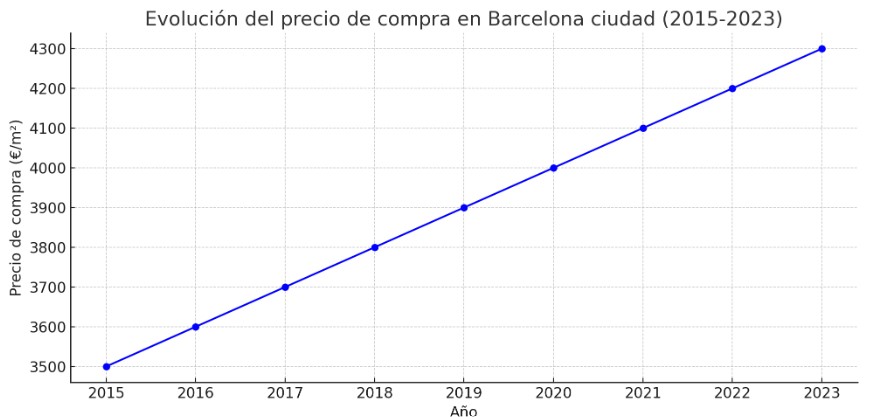
Price per square meter in Barcelona
When exploring the real estate market, the price per square meter in Barcelona stands out as a key reference point for understanding property values in one of Europe’s most dynamic cities. Barcelona’s market covers a wide range, from more affordable peripheral neighbourhoods to some of t
Read more


