






Barcelona has one of the most stratified property markets in southern Europe. The gap between its most expensive neighbourhoods and its citywide average is not marginal: as of June 2026, the priciest addresses trade at nearly double the city mean. For buyers looking at the top end of the market, understanding which areas command the highest prices, and why, is the starting point for making a well-informed decision.
This guide covers the six most expensive neighbourhoods in Barcelona in 2026, with current price data, a profile of what daily life looks like in each, and an honest assessment of who each area suits best.
What makes a Barcelona neighbourhood expensive?
Price per square metre is the most direct measure, but it is not the only one. The most expensive neighbourhoods in Barcelona tend to share a combination of factors that drive values above the city average: low building density, a high proportion of large-footprint properties, proximity to prestigious international schools, access to green space, low traffic noise, and a resident profile that includes a significant share of senior executives, diplomats, and high-net-worth international buyers.
Renta per cápita data from the Barcelona city council consistently places the upper districts of Sarrià-Sant Gervasi, particularly Pedralbes, at the top of the income rankings across the city’s 73 neighbourhoods. That correlation between income concentration and property values is self-reinforcing: the presence of well-resourced residents sustains the high-end services, schools, and amenities that attract the next generation of buyers at the same level.
It is also worth distinguishing between two types of “expensive” in Barcelona. Some areas, like Passeig de Gràcia and Diagonal Mar, record very high average asking prices per square metre driven by a combination of iconic location, investment demand, and a small number of ultra-premium units that pull the average up. Others, like Pedralbes and Sarrià, are expensive because they are genuinely residential at the top end: large family homes, international schools, and a quieter pace of life that a specific type of buyer will pay a significant premium for.
Barcelona’s most expensive neighbourhoods at a glance: 2026 price comparison
The table below shows average asking prices per square metre across Barcelona’s most expensive areas as of June 2026, set against the citywide average.
| Neighbourhood | Avg. price/m² (June 2026) | District | Profile |
|---|---|---|---|
| Passeig de Gràcia | ~€10.024 | Eixample | Prestige / Investment |
| Diagonal Mar / Front Marítim | €9.062 (+15.7% YoY) | Sant Martí | Luxury waterfront |
| Pedralbes | €8.473 (+12.7% YoY) | Les Corts | Family / Private |
| Les Tres Torres / Turó Park | ~€6.450 | Sarrià-Sant Gervasi | Classic luxury / Family |
| Sarrià | ~€6.400 | Sarrià-Sant Gervasi | Village feel / Family |
| Sant Gervasi-La Bonanova | ~€6.093 | Sarrià-Sant Gervasi | Residential / Expat families |
| Barcelona citywide average | €5.269 |
Sources: Idealista price reports June 2026, RealAdvisor June 2026, Engel & Völkers June 2026, Inmohogaris 2026. Figures represent average asking prices; transaction prices typically close 7-12% below asking in this segment.
Pedralbes: the most exclusive residential neighbourhood in Barcelona
Pedralbes sits at the western end of Avinguda Diagonal, rising toward Collserola in the Les Corts district. It is the neighbourhood with the highest average income per capita in Barcelona, and it has held that position consistently for decades. The built environment reflects it: wide, tree-lined streets, embassy residences, gated residential blocks, detached villas, and a density so low it feels closer to a suburb than a city neighbourhood.
The area clusters around Avinguda de Pedralbes, Avinguda Pearson, and Carrer Bosch i Gimpera. Properties here tend to be significantly larger than anywhere else in the city, with terraces, gardens, parking, and storage that are difficult or impossible to find in central Barcelona at any price. The atmosphere is quiet and private, which is precisely why it attracts the buyers it does: senior executives at multinational companies, diplomats, international sports figures, and established families who value discretion and space above street life.
What is it like to live in Pedralbes?
Pedralbes feels genuinely different from central Barcelona. There is very little street commerce, no real nightlife, and fewer casual bar or restaurant options than in other upper-zone neighbourhoods. The trade-off is an unusually quiet and green living environment within the city limits. Parc de Cervantes, with its 10,000 rose bushes, is within easy reach. The Monestir de Pedralbes, a 14th-century Gothic monastery with one of the largest cloisters in Europe, sits at the edge of the neighbourhood. The Palau Reial gardens along Diagonal offer another large green space.
Public transport connectivity is reasonable along Diagonal itself but thinner in the more residential uphill streets, which means many residents use a car for daily errands. The airport is well-connected by road, a significant practical advantage for the international buyer profile the area attracts.
Schools and international education in Pedralbes
Education is a major factor in the demand for Pedralbes. The Lycée Français de Barcelone is located in the neighbourhood itself. ESADE and several campuses linked to the University of Barcelona and the Polytechnic University of Catalonia are within the Zona Universitària immediately adjacent. Several private and international schools serving the English, German, and Japanese communities are a short commute away. For families relocating from abroad, the concentration of school options in this part of the city is one of the primary reasons Pedralbes appears at the top of their shortlist.
Property prices in Pedralbes in 2026
The average asking price in Pedralbes stood at €8.473 per m² in June 2026, representing annual growth of 12.7%. This places it well above the Les Corts district average of €6.729/m² and significantly above the Barcelona citywide average of €5.269/m². A 200 m² home at neighbourhood average would be listed at around €1.7 million before taxes and fees. At the premium end, villas and large detached homes regularly reach €5 to €12 million. Browse our current properties for sale in Pedralbes for a live view of what is available.
Who buys in Pedralbes?
International buyers from the US, UK, France, Germany, and the Middle East represent a significant share of transactions. The typical buyer is a senior professional or entrepreneur relocating to Barcelona with a family, prioritising school access, privacy, and space. Investors are a smaller part of the market here than in central areas: Pedralbes is bought primarily to live in, not to rent out.
Sarrià: village character at urban prices
Sarrià was an independent municipality until 1921, when it was absorbed into Barcelona, and it has never quite let go of that identity. The neighbourhood retains a distinctly local character: a pedestrianised main street, a weekly market, a parish church at the centre of civic life, and a pace that feels noticeably slower than the rest of the city. It is consistently rated among the most liveable neighbourhoods in Barcelona by residents who prioritise quality of life over proximity to the urban centre.
It is also one of the most expensive. The combination of large family apartments, a high concentration of prestigious schools, excellent road connections to the city’s exit routes, and a residential profile dominated by established families and international professionals keeps demand consistently above supply.
What is it like to live in Sarrià?
Sarrià works particularly well for families with children. The pedestrianised Carrer Major is genuinely walkable, with independent shops, bakeries, a pharmacy, and several good restaurants within a few minutes on foot. The Plaça de Sarrià functions as a proper neighbourhood square where people actually sit and meet. Green spaces, including the Parc de la Ciutadella equivalent hillside paths, are accessible without getting in a car. The FGC train connects Sarrià to Plaça Catalunya in under fifteen minutes, making the commute to the city centre genuinely viable without a vehicle.
Schools in Sarrià
Sarrià and the immediately surrounding area have one of the highest concentrations of prestigious private and international schools in Barcelona. Benjamin Franklin International School, La Salle Bonanova, and several other well-regarded institutions are within easy reach. This school density is a primary driver of demand among relocating families from the US and UK, for whom school choice is often the first decision that determines neighbourhood.
Property prices in Sarrià in 2026
The average price per square metre in Sarrià sits at approximately €6.400/m² in 2026, with a year-on-year increase of around 15% since 2020. A family apartment of 150 m² typically starts at €900.000 and rises well above €1.5 million for larger or refurbished properties. Larger family homes with gardens or terraces can reach €3 to €5 million. Browse our current properties for sale in Sarrià to see what is currently on the market.
Who buys in Sarrià?
Families with school-age children, both local and international, dominate the buyer profile. American and British buyers relocating to Barcelona for work or lifestyle represent a significant share of demand. The neighbourhood is less attractive to pure investors than to owner-occupiers who plan to stay for several years.
Turó Park and Les Tres Torres: old-money elegance in the upper zone
Turó Park and the adjacent neighbourhood of Les Tres Torres occupy the upper section of Sarrià-Sant Gervasi between Avinguda Diagonal and the Via Augusta axis. This is the part of Barcelona most associated with classic architectural luxury: large pre-war and mid-century apartment buildings on wide streets, portero-serviced lobbies, and the kind of floor plans that simply do not get built anymore. A 400 m² flat on a single floor, designed by a notable architect of the 1950s, with the original parquet, marble entrance hall, and views over the park: this is the typical premium offer here.
The neighbourhood takes its name from the Turó Park garden, a small but beautifully maintained green space that anchors the area and acts as a social focus for local residents. The surrounding streets, particularly Carrer Mestre Nicolau and Avinguda de Pau Casals, are among the most sought-after addresses in the city for buyers who want central-ish location combined with residential scale.
What is it like to live in Turó Park and Les Tres Torres?
The area offers a denser, more urban version of upper-zone Barcelona than Pedralbes or Sarrià. High-end boutiques, restaurants, and services are readily available along Diagonal and the surrounding streets. The FGC line at Les Tres Torres station gives direct access to Plaça Catalunya without driving. The profile of residents is cosmopolitan and professional, with a significant representation of senior executives, private bankers, and established business families who have lived in the area for generations alongside newer international arrivals.
Property prices in Turó Park and Les Tres Torres in 2026
Average asking prices in Les Tres Torres stand at approximately €6.450/m² in 2026. The specific Turó Park micro-market, covering the streets immediately surrounding the park, operates at a premium above this average, with some transactions on the most prestigious addresses reaching €8.000 to €10.000/m². Entry-level properties in the area start around €900.000, while signature apartments on upper floors of landmark buildings regularly exceed €3 to €5 million. Our properties for sale in Turó Park and properties for sale in Les Tres Torres include a selection across this full price range.
Who buys in Turó Park and Les Tres Torres?
A mixed profile: established Barcelona families with multigenerational ties to the neighbourhood, international professionals who want upper-zone prestige with better urban connectivity than Pedralbes, and buyers attracted specifically by the architectural quality of the building stock. Investors seeking premium rental income also feature here more than in the quieter family zones further up the hill.
Sant Gervasi-La Bonanova: prestigious, family-oriented, and consistently in demand
La Bonanova sits between Turó Park and Sarrià, roughly bounded by Passeig de la Bonanova, Carrer Mandri, and Carrer Ganduxer. It shares characteristics with both neighbours: more urban than Sarrià, quieter than Turó Park, and with a particularly strong concentration of prestigious schools along and near the Passeig de la Bonanova axis that makes it one of the most sought-after addresses for relocating families in all of Barcelona.
The Passeig de la Bonanova itself is one of the most iconic residential streets in the city: wide, tree-lined, with large classic buildings offering the kind of square footage and ceiling heights that are rare in Barcelona. Properties here routinely reach 300 to 500 m², with period features, multiple parking spaces, and the portero service that this buyer segment expects.
What is it like to live in La Bonanova?
La Bonanova is calm without feeling remote. The neighbourhood has its own services, restaurants, and local commerce, and is well connected by both bus and the FGC from Sarrià station. The resident profile is heavily family-oriented, with a significant international component drawn by the school options. Oak House School, St. Paul’s School, and La Salle Bonanova are all within easy reach, which drives constant demand from American, British, and northern European families who need English-language or international curriculum schooling.
Property prices in La Bonanova in 2026
The average price per square metre in Sant Gervasi-La Bonanova sits at approximately €6.093/m² in 2026. Family apartments of 200 m² or more typically start above €900.000 and reach well over €1.5 million in the best buildings on the most sought-after streets. There can be up to €1.500/m² difference between the prime streets around Passeig de la Bonanova and the edges of the neighbourhood, so precise location within the area matters significantly. See our current properties for sale in La Bonanova for an up-to-date view of the market.
Who buys in La Bonanova?
International families relocating to Barcelona who need school access represent the dominant buyer profile. American and British buyers are particularly well represented here. The neighbourhood is also popular with senior professionals at Barcelona-based multinationals and financial institutions who want family-appropriate space and a residential environment without sacrificing urban connectivity.
Passeig de Gràcia and the Eixample Dreta: prestige, architecture, and investment
Passeig de Gràcia is in a different category from the upper-zone neighbourhoods. It is not primarily a family residential area in the way that Pedralbes or Sarrià are. It is the most architecturally significant boulevard in the city, lined with Modernista landmarks including La Pedrera and Casa Batlló, home to the flagship stores of every major luxury brand, and the address associated with Barcelona’s highest-profile residents and most visible business success.
Living on or immediately adjacent to Passeig de Gràcia places you at the cultural and commercial heart of the city. Everything is within walking distance. The trade-offs are tourist traffic during the day, a social scene that skews cosmopolitan and transient, and smaller average floor plans than the upper zones at equivalent price points.
What is it like to live on Passeig de Gràcia?
For buyers who want maximum urban intensity, cultural access, and the prestige of the city’s most iconic address, Passeig de Gràcia delivers. Restaurants, galleries, theatres, and transport hubs are all immediately at hand. The Eixample grid, designed by Ildefons Cerdà in the 19th century, is one of the most liveable urban plans ever built, with chamfered corners that open sightlines and create small squares at every intersection. The Dreta de l’Eixample, the right side of the Eixample running east from Passeig de Gràcia, is particularly desirable, with quieter streets than the main avenue itself and a strong local residential character.
Property prices on Passeig de Gràcia in 2026
Passeig de Gràcia records the highest average asking price of any area in Barcelona: approximately €10.024/m² as of June 2026, with flat prices increasing 6.2% year-on-year. At neighbourhood average, a 150 m² apartment would be listed at around €1.5 million. Ultra-premium units in landmark buildings, particularly those with modernista architectural features, terraces overlooking the boulevard, or access to rooftop space, regularly exceed €5 to €10 million. The broader Dreta de l’Eixample district average is approximately €5.900/m², reflecting the wide range of properties across the grid. Browse our properties for sale in Passeig de Gràcia and the wider Eixample to see current availability across this range.
Who buys on Passeig de Gràcia?
A more mixed buyer profile than the upper zones: international investors seeking prestige assets and rental yield alongside owner-occupiers who value urban centrality over residential quietude. Buyers from the Middle East, Asia, and the Americas represent a disproportionate share of the top-end transactions. For families with children, the area is less typical than the upper zones, largely because school access requires a commute and green space is more limited.
Diagonal Mar and the Poblenou Waterfront: the most expensive per square metre in 2026
Diagonal Mar and the Front Marítim del Poblenou recorded the highest average asking price per square metre of any Barcelona neighbourhood in June 2026: €9.062/m², with annual growth of 15.7%. That figure places it above Pedralbes and at a level that surprises many buyers who associate the area with the post-Olympic development of the 1990s rather than with the city’s established luxury zones.
The explanation lies in the specific nature of the housing stock. Diagonal Mar contains a concentration of large, modern seafront apartments in gated developments with swimming pools, concierge services, sea views, and the kind of contemporary amenities that older stock in Pedralbes or Sarrià cannot offer. For a specific buyer profile, primarily international, used to resort-style residential living with managed facilities and direct beach access, there is no comparable alternative in Barcelona.
What is it like to live in Diagonal Mar?
The area has a very different feel from the rest of the city’s expensive neighbourhoods. It is modern, open, and oriented toward the sea in a way that the upper zones are not. The Diagonal Mar shopping centre and the Parc de Diagonal Mar, the second largest park in Barcelona, are immediately accessible. The Mar Bella beach is within walking distance. Public transport connections to the city centre via the L4 metro are efficient.
The trade-offs are fewer independent shops and restaurants compared to established residential neighbourhoods, a built environment that lacks the architectural character of the upper zones, and a social scene that is less rooted in long-term neighbourhood community. It suits buyers who want the sea, modern amenities, and contemporary design over historical prestige and village character.
Property prices in Diagonal Mar in 2026
With an average of €9.062/m² and the fastest year-on-year growth rate of any area in this guide at 15.7%, Diagonal Mar has moved firmly into the top tier of Barcelona pricing. Entry-level properties in the premium developments start around €600.000 for smaller units, with larger seafront apartments and penthouses exceeding €2 to €4 million. View our current properties for sale in Diagonal Mar and the adjacent Poblenou waterfront for live listings in this area.
Who buys in Diagonal Mar?
International buyers from the US, UK, northern Europe, and the Middle East who prioritise sea views, modern construction, and managed amenities. The area is also popular with buyers seeking a Barcelona property as a second residence or investment. The rental market here is strong, particularly for high-end short and medium-term lets to an international clientele.
Which is the most expensive neighbourhood in Barcelona?
The answer depends on how you define “most expensive.” In terms of average asking price per square metre, Passeig de Gràcia leads at approximately €10.024/m², followed by Diagonal Mar at €9.062/m² and Pedralbes at €8.473/m². In terms of highest-income residential neighbourhood and the greatest concentration of large family homes at the top of the market, Pedralbes holds that position clearly. In terms of fastest price growth in 2026, Diagonal Mar leads at 15.7% year-on-year.
For buyers, the more useful question is which area matches their specific priorities: school access, green space, architectural character, sea views, urban connectivity, or investment return. Each of the six neighbourhoods covered here offers a different combination of those factors at prices that are uniformly well above the Barcelona average.
How BCN Advisors can help you find the right neighbourhood
We have been working exclusively in the Barcelona luxury property market since 2005. Our team has direct experience with all six areas covered in this guide, including access to off-market properties that never appear on public portals, which represents a significant share of transactions at the top end of the market in Pedralbes, Sarrià, and Turó Park specifically.
If you are looking to buy luxury real estate Barcelona, we can help you understand which neighbourhood fits your situation, arrange accompanied viewings, and manage the purchase process from first shortlist to completion. We also work with sellers looking to sell a property in Barcelona‘s premium market, with a track record in the upper-zone districts where discretion and specialist buyer networks matter most.
Browse our current selection of properties for sale in Barcelona, or contact us directly to discuss your requirements with one of our senior advisors.

You may also be interested in...
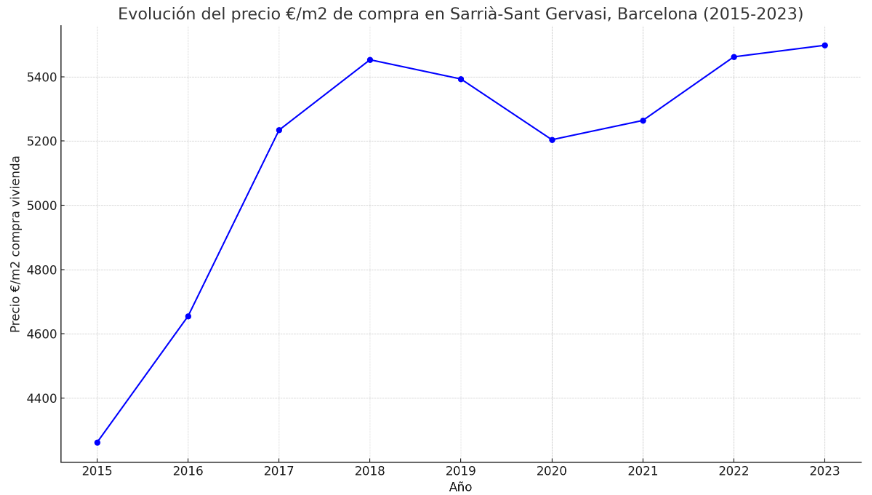
Price per square meter in Sarrià-Sant Gervasi
When exploring the luxury real estate market in Barcelona, the price per square meter in Sarrià-Sant Gervasi stands out as a key indicator of exclusivity and prestige. This emblematic district, known for its quiet streets, green parks, and exceptional quality of life, has established itself as one o
Read more
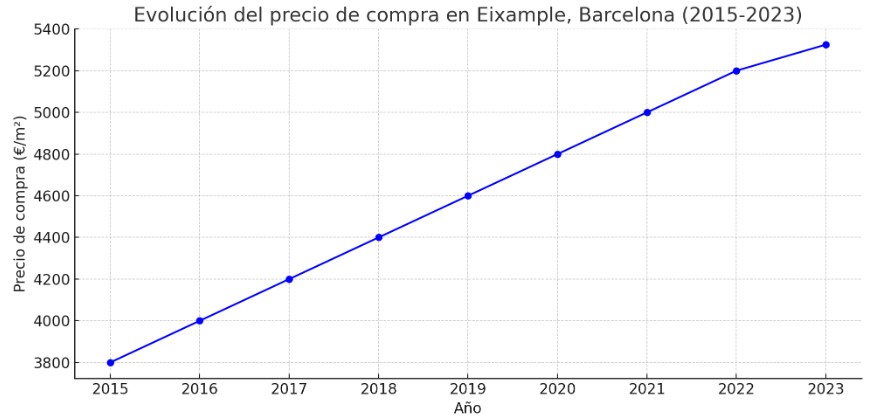
Price per square meter in the Eixample
When exploring the luxury real estate market in Barcelona, the price per square meter in the Eixample stands out as a key indicator of exclusivity and prestige. This emblematic district, recognised for its Modernist architecture, its wide boulevards, and its vibrant urban life, has established itsel
Read more
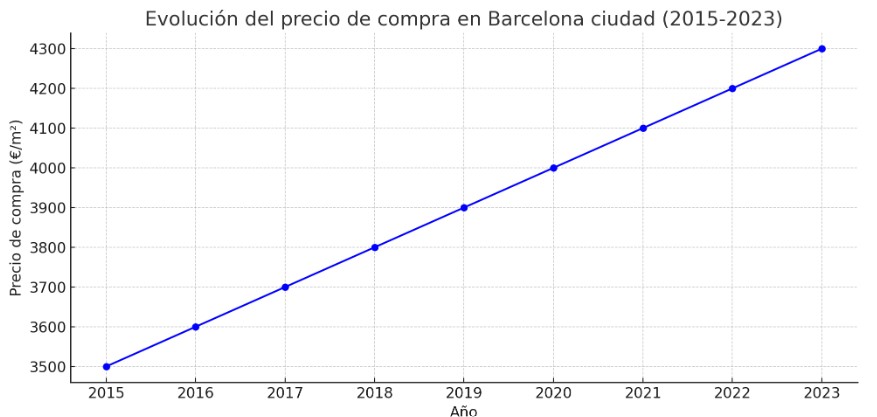
Price per square meter in Barcelona
When exploring the real estate market, the price per square meter in Barcelona stands out as a key reference point for understanding property values in one of Europe’s most dynamic cities. Barcelona’s market covers a wide range, from more affordable peripheral neighbourhoods to some of t
Read more



